

Choosing a name for your business is one of those deceptively simple tasks that can take weeks or months to get just right. It’s exciting, but also high stakes. After all, the name must sound professional, feel memorable, and work across all platforms, from invoices to Instagram handles.
And once it’s finalised, you end up with an equally pressing question: What about your website? Should your website domain name be identical to your business name, or should you tweak it?
It’s common for new founders to hesitate before coming to a decision. However, the truth is that there’s no law or rule requiring your domain and business name to match. What matters most is how easily people can find and remember you.
In this article, we’ll unpack how these two names can work together, and when it’s perfectly fine for them not to match.
Key takeaways
- A domain that differs slightly from your business name is fine if it stays clear, memorable, and on-brand.
- Matching domains can boost consistency, but aren’t essential for SEO or customer trust.
- Shorter, simpler domains often work better than long, exact matches with legal suffixes.
- While a domain doesn’t have to match your legal name, UK companies must show their registered name and number on their website, typically in the footer.
Why your business name and domain name matter
Your business name and domain name may seem like separate decisions, but they play complementary roles in how your company is perceived. One defines you legally, and the other shapes how people find you online.
How people discover and remember your brand
Your business name is your legal identity; it appears on invoices, contracts, and filings with Companies House. Your domain name, on the other hand, is like your online storefront: the digital signpost customers use to reach you.
- 4 best social media management tools for SMEs
- How do I choose a name for my limited company?
- The small business owners’ guide to copyright
When those two align, it’s simple for people to connect your offline and online presence. Someone who spots your business card or sees your van on the road can find you online straight away.


But matching exactly isn’t always essential. Plenty of businesses succeed with names that are close rather than identical. “Greenway Design Studio Ltd” might use greenway.co.uk or greenwaydesign.co.uk. After all, both versions are clear, distinctive, and easy to remember.
First impressions online vs. legally registered names
Your registered company name doesn’t need to dictate what appears on your website. In fact, most small businesses trade under a simplified version of their legal name.
Take a company named Harrison & Co Accountancy Limited. That name works for official paperwork, but it’s long and formal for a URL. The team might choose harrisonaccounting.co.uk or harrisonandco.co.uk for a cleaner, friendlier web presence.
Similarly, a firm called Bright Futures Consultancy Services Ltd could sensibly opt for brightfutures.co.uk, as it’s short, clear, and still on-brand.
As long as your website includes your registered company name and number in the footer (a Companies House requirement), you can safely trade online under a simpler version.
This flexibility is particularly useful if your legal name includes words like ‘Limited’ or ‘Holdings’ that don’t need to feature in your public branding.
Should your domain and business name match?
Once you’ve chosen your business name, the next instinct is often to secure the matching domain. That’s usually a smart move, but it’s not always necessary. The right choice depends on your brand, your budget, and what’s available.
The benefits of a matching domain name
When your business and domain share the same name, everything looks and feels more cohesive.
- Brand consistency – People see the same name across your website, social channels, and printed materials, making your brand easier to recall.
- Word-of-mouth referrals – If your business name is your web address, there’s no need for explanations or spelling corrections, as people can find you quickly.
- Professionalism – A matching domain (and email address like hello@yourbrand.co.uk) gives the impression of a well-organised, trustworthy company.
- Scalability – When your brand and domain move in lockstep, adding new products or expanding geographically is simpler. Everything remains under one recognisable umbrella.
The drawbacks of a matching domain name
That said, a perfect match can also create challenges:
- Limited availability – Many short, obvious .co.uk and .com domains are already registered, especially for generic or popular names.
- Cost barriers – Buying a domain from a current owner can be expensive, with costs ranging from hundreds to thousands of pounds.
- Awkward URLs – Long company names make for clumsy, forgettable domains. jamesandharrisonbuildingconsultantsltd.co.uk isn’t easy to say or type.
- Reduced flexibility – A domain that mirrors your company name too closely may limit your options. If you ever rebrand or pivot to new services, it can feel restrictive.
So, while a matching domain can look sleek, it’s not always practical or the best use of your startup budget.
When your ideal domain is already taken
If the perfect name isn’t available, don’t let that derail your launch. There are several ways to find a workable alternative that still feels like “you”:
- Add a short, natural modifier. Words like “studio,” “group,” “team,” or “HQ” often slot in neatly.
- Try another extension. In the UK, .co.uk and .uk are standard, but .com, .io, and industry-specific domains (such as .ai) are also trusted.
- Use abbreviations. A shortened version, such as gwpartners.co.uk, can be more memorable than the full name.
- Avoid excessive punctuation. Hyphens are allowed but can be clunky in speech or lead to typos.
- Check resale marketplaces. If your desired domain is already owned, you might be able to buy it at a reasonable price.
The goal is clarity, not perfection. Once your domain clearly connects to your brand, customers will find you – and Google will too.
Does your domain name affect SEO?
One of the most common concerns among founders is whether a mismatched or non-keyword domain might negatively impact their search rankings. The reassuring news is: not really.
Search engines look at hundreds of signals to decide where to rank a website. While they do register the words in your domain name, that factor carries far less weight than it once did.
What Google actually looks for
Google cares far more about what your website offers (in the form of your content, page structure, backlinks, and overall authority) than about what’s in your domain. In fact, Google deliberately reduced the ranking advantage of “exact match domains” (such as bestplumberlondon.co.uk) years ago, because too many low-quality sites had exploited that loophole.


So while it’s fine if your domain contains a keyword or two, you won’t be penalised or significantly boosted either way.
Should I choose a keyword-rich or brand-based domain?
There are two main naming approaches:
- Keyword domains – include what you do (e.g. manchesterplumbing.co.uk). They can be helpful for clarity, especially in local trades.
- Brand domains – use your business name (e.g. reedandsons.co.uk). They build identity and trust over time.
For most startups, a brand domain is the stronger long-term choice. It grows with you, looks professional, and helps establish credibility that goes beyond a single service or location.
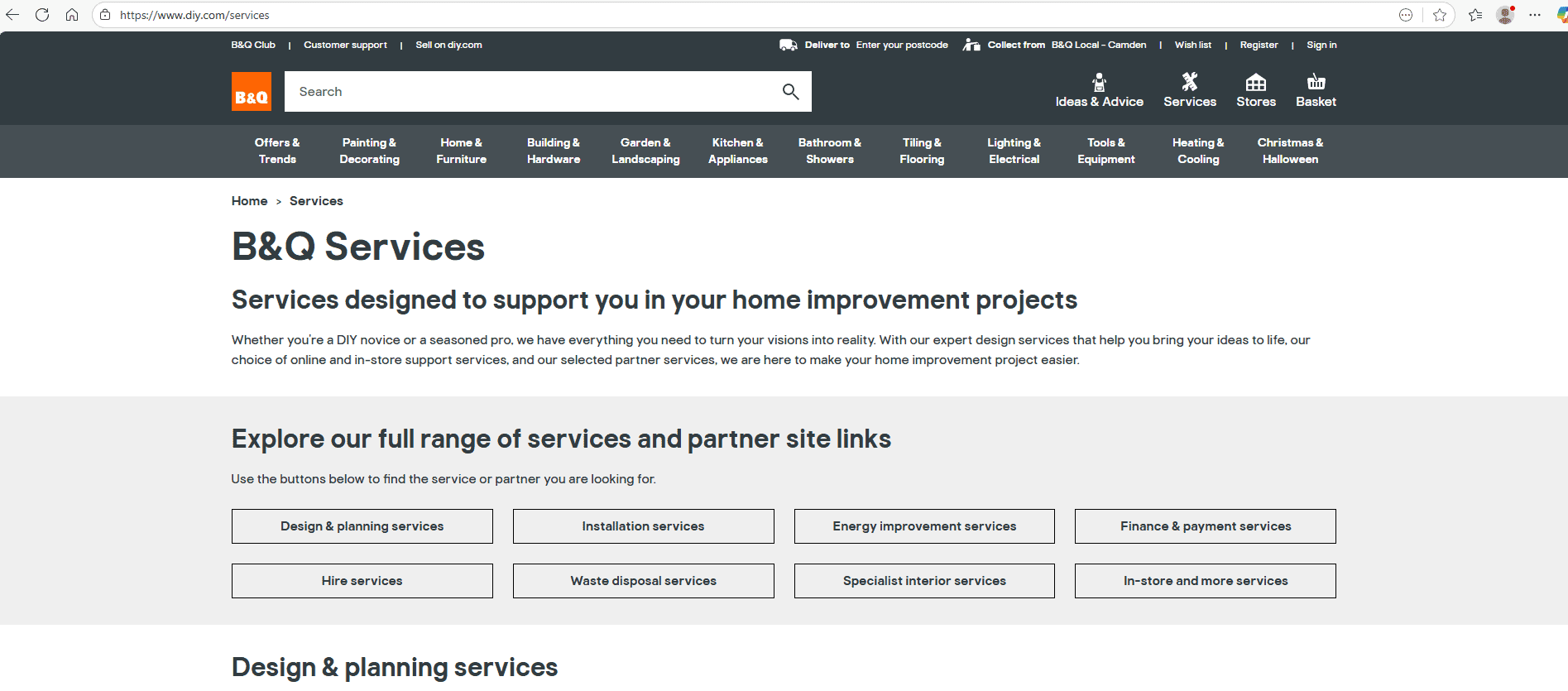
An interesting example of domain strategy is the home improvement retailer B&Q, which uses the domain www.diy.com. Instead of using its brand name in the URL, B&Q opted for a highly search-friendly, keyword-rich domain that directly aligns with the core activity of its customers – DIY. This approach helps them capture organic search traffic from people looking for general home improvement help, not just those already familiar with the B&Q name. It’s a smart move that shows how a keyword-first domain can also serve as a useful entry point, even for well-established brands.
When should I choose a different domain name, and how can I make it work?
There are several good reasons why your domain and business name might not match exactly, and sometimes, that’s the smarter choice. The key is to make sure the difference still feels intentional and easy for customers to understand.
When is it better to use a variation of your business name for your domain?
As we mentioned, your legal name may be long, formal, or include words like ‘Limited’ or ‘Holdings’ that don’t suit a clean, modern URL. In that case, simplifying your domain helps people find you more quickly and remember you more easily.
For instance, The Artisan Coffee Collective Ltd could launch using artisancoffee.co.uk. A firm called North West Digital Marketing Services Ltd might opt for nwdigital.co.uk. These are both short, direct, and still recognisable.
It can also help when your company name reflects a legacy structure or partnership. If your official name is M. Jones & Partners Accountancy Ltd, using jonesaccounting.co.uk feels fresher and friendlier online while still aligned with your brand.
How can I show the link between my business name and domain?
If your domain differs from your registered name, bridge the gap visually and verbally. A few small touches go a long way:
- Add your full legal name and company number to your website footer (a UK requirement).
- Use your logo and tagline consistently across your website, social media, and stationery to reinforce that it’s all part of one cohesive business.
- Mention both names in your About section, e.g. “Jones Accounting is a trading name of M. Jones & Partners Accountancy Ltd.”
These details make the relationship transparent and strengthen trust.
Can I use different domain names for different services?
If your business operates under several trading names (with, for example, one company offering design, print, and web services), then each sub-brand can have its own site and domain, provided you’re transparent about the connection. A simple line, such as “Brand X is a trading name of ABC Studios Ltd,” ensures compliance and avoids confusion.
And remember, whatever structure you choose, the goal is consistency. Customers should never have to wonder whether they’ve found the right business, even if your web address and company name aren’t identical.
Tips for choosing your business name and domain
By this point, you should have a clearer sense of what matters in a business name and domain. Now it’s time to bring it all together with a few simple rules of thumb.
1. Prioritise clarity and availability
Before you fall in love with a name, check that the domain and social media handles are available. Use a domain registrar’s search tool and Companies House name checker side by side.
If the combination is taken, look for natural variants that preserve readability. A simple, memorable domain is always better than a forced exact match. And keep in mind that domain availability changes quickly, so once you’ve found a good one, register it promptly.
2. Understand the legal basics
In the UK, you can trade under a name that’s different from your registered company name. However, you must:
- Display your registered name and number on your website and stationery.
- Avoid using words like limited or ltd in your trading name if they’re not part of your registered company name.
- Check that your name doesn’t infringe on an existing trademark (use the UK IPO search before committing).
This means you can safely have “Greenway Ltd” trading as Greenway Design with a domain like greenwaydesign.co.uk, as long as the legal disclosure is visible somewhere.
3. Think long-term
Try to choose a domain that will still make sense as your business evolves. Overly specific names can make it harder to expand or diversify later. A broader name gives you room to grow without confusing your customers. And don’t forget the practical side: register common variants (such as .co.uk, .uk, and .com) to prevent copycats or brand dilution in the future.
Getting your name and domain right from the start
The best setup is when your business name and domain feel naturally connected: not necessarily identical, but clearly part of the same brand story. But don’t get stuck chasing a perfect match. The strongest brands are the ones that build clarity and trust first, then let the technical details follow. After all, a clear and confident identity will always outlast a clever domain name.
If you’re still deciding on a name, it’s worth checking both Companies House and domain availability at the same time. That way, you can register a company name that works both legally and online from day one.
And when you’re ready to make it official, we can help you take that step quickly and confidently. From choosing a compliant company name to forming your business and securing your registered office, our formation packages give you the solid foundations every brand needs – both on paper and on the web.




Join The Discussion