

Key takeaways
- Capital expenditure usually relates to assets that benefit your business beyond the current accounting period, not everyday running costs.
- For UK tax, capital spending is often relieved through capital allowances, and many small businesses can claim 100% tax relief on qualifying plant and machinery in the year of acquisition through the Annual Investment Allowance (AIA) up to £1 million.
- Classifying and claiming for capital allowances correctly matters because directors must keep proper records, file accurate accounts and tax returns, and remain legally responsible even if they use an accountant.
What is capital expenditure?
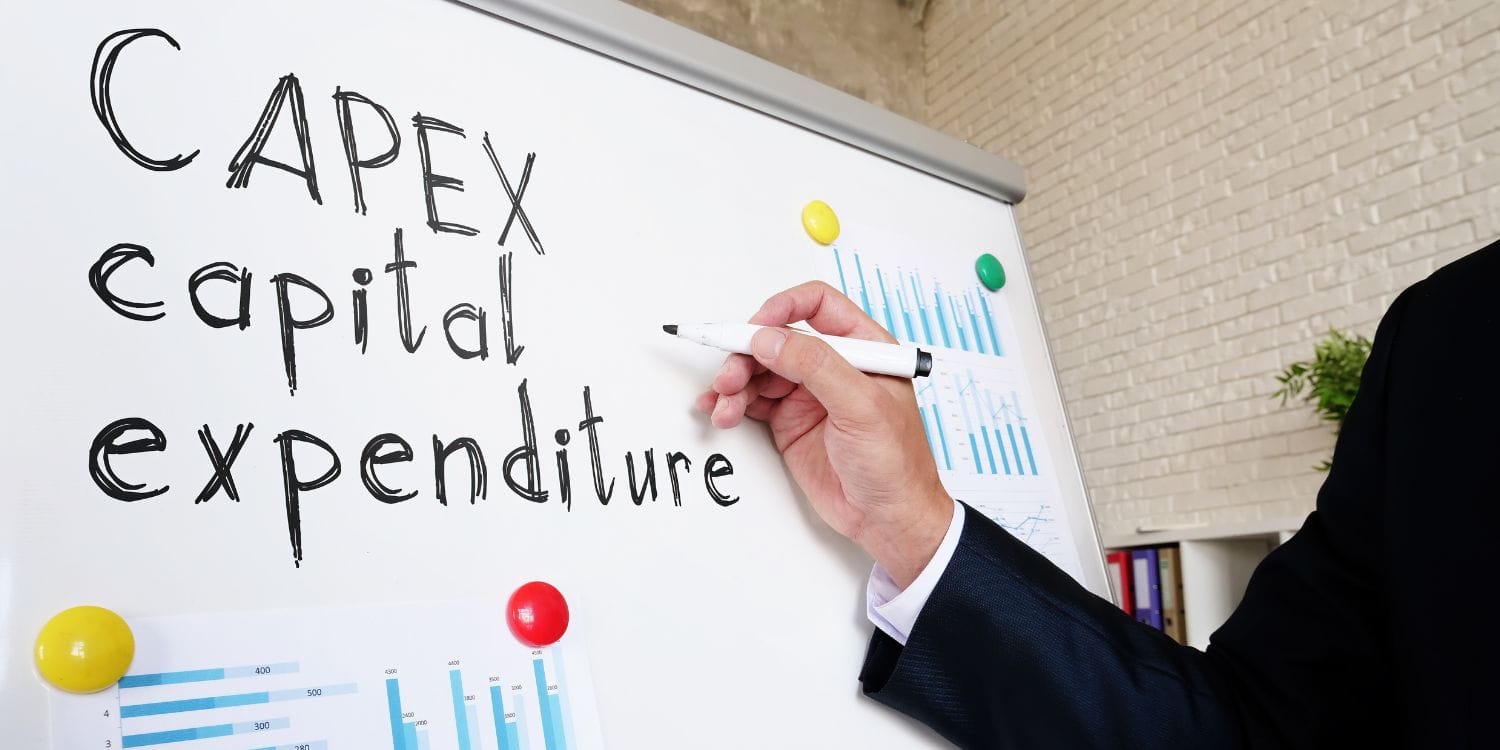
In plain English, capital expenditure, or CapEx, is money spent on buying, improving, or creating something your business will use long-term. Think of a van, a laptop, a production machine, or a fitted air-conditioning system on your premises. These are not everyday running costs. They are longer-term business assets.
In determining whether something counts as capital expenditure, HMRC typically requires you to look at what spending achieves, rather than on what you spent the money.
If the effect is to acquire, dispose of, or modify a capital asset, the expenditure is capital. That is why buying a new machine is usually a capital expense, while paying the electricity bill for that machine is not.
This distinction matters for a limited company director. Revenue expenses can normally be deducted from company profits if they meet HMRC’s rules. Capital expenditure is different. It usually sits in the balance sheet as an asset and is relieved for tax through capital allowances instead.


Capital expenditure vs revenue expenditure
Revenue expenditure means the ordinary costs of running your company. HMRC describes these as day-to-day running costs, such as wages, trading stock, and rent. Revenue expenses can usually be deducted from profit if they are not specifically disallowed and are incurred wholly and exclusively for the business.
Capital expenditure is different because it usually creates or improves a business asset. HMRC’s manuals also make a useful repairs point: a normal repair is usually revenue, but replacing an asset or making a significant improvement is capital. That is why repainting your office is usually revenue, while a major shop refit or structural upgrade may be capital.
Capital expenditure vs revenue expenditure: key differences
| Capital expenditure | Revenue expenditure |
|---|---|
| Spending on acquiring or improving a longer-term asset | Day-to-day business running costs |
| Usually benefits the business over more than one financial period | Usually relates to the current period’s trading |
| Recorded as an asset, then spread through depreciation or similar accounting treatment over time | Recorded as an expense in the accounts |
| Tax relief usually comes through capital allowances | Usually deducted from profit as a business expense, if allowable |
| Examples: computers, vans, machinery, shop fittings, heating systems | Examples: rent, wages, utilities, stationery, routine repairs |
This is the simplest answer to the common query capital expenditure or revenue expenditure: CapEx equips or improves the business for the future, while revenue expenditure keeps the business running today.
- Do I pay tax on my business expenses?
- Reduction of capital – everything you need to know
- 10 steps for protecting your small business from financial risk
What counts as capital expenditure for a small business?
If you are asking what counts as capital expenditure for a small business in the UK, HMRC’s plant and machinery rules are the best starting point. Capital allowances can usually be claimed on equipment, machinery, and business vehicles that you keep using in the business. HMRC’s examples include computers, office furniture and equipment, vans, shop fittings, and some building fixtures.
For a new founder, common CapEx examples include a laptop for work, office desks and chairs, a company van, manufacturing tools, cameras, point-of-sale hardware, and fitted systems such as lighting, heating, or air-conditioning that count as integral features. In short, yes, a laptop is usually capital expenditure in the UK if the company buys it to keep and use it in the business.
Some items do not count as plant and machinery for these rules. HMRC says you cannot usually claim plant and machinery allowances on land, structures such as bridges or roads, and buildings themselves, although some structures and buildings may qualify for the separate Structures and Buildings Allowance. AIA also does not apply to business cars, even though cars may qualify for other capital allowances.
The grey area is often repairs and improvements. HMRC says a repair that restores an asset is normally allowable for revenue expenditure. But if the work alters, improves, or replaces the asset in a meaningful way, it is capital. That distinction is one of the most common bookkeeping errors for small companies.

The three types of capital expenditure
In business planning, it helps to split CapEx into three practical categories. HSBC UK uses maintenance, growth, and strategic CapEx. These are management labels, not separate HMRC tax categories, but they are useful when you are deciding what to buy and why.
Maintenance CapEx
Maintenance CapEx keeps your current business running. Replacing a worn-out oven in a bakery, renewing an ageing server, or upgrading a failing till system can fall into this bucket if the spend protects current productivity.
Growth CapEx
Growth CapEx expands capacity. A second van, more desks for new staff, or additional production equipment fit here because the point is to increase output, sales, or service capacity over time.
Strategic CapEx
Strategic CapEx supports bigger long-term moves. Examples include investing in technology to enter a new market, fitting out a first premises, or making an acquisition that strengthens your competitive position.
This classification matters because it improves budgeting. A founder can usually delay some strategic CapEx, but not all maintenance CapEx. That makes capital planning more realistic and less likely to damage cash flow. That final point is an inference from the fact that CapEx often involves substantial upfront costs and should be assessed against available cash and future needs.
How capital expenditure is treated for tax in the UK
For tax, the core rule is simple. You do not normally deduct capital expenditure from profits in the same way as an ordinary business expense. Instead, you look at capital allowances. HMRC says capital allowances let you deduct some, or all, of the value of qualifying items from profits before tax.
For most small companies, the main relief is the Annual Investment Allowance (AIA). HMRC says you can claim AIA on most plant and machinery up to the AIA limit, and the current AIA amount is £1 million. That means many small, limited companies can deduct 100% of qualifying spending in the year of purchase, as long as the asset qualifies.
AIA snapshot for small businesses: HMRC’s current guidance says the Annual Investment Allowance is £1 million and applies to most plant and machinery, but not business cars.
If an item does not qualify for AIA, or you spend more than the AIA limit, you may need to use writing-down allowances instead. HMRC says writing-down allowances let you deduct a percentage of the value each year. As of April 2026, HMRC’s rates page shows a main pool rate of 14% and a special rate pool of 6%. The special rate pool covers items such as integral features, long-life assets, solar panels, and some cars.
Not all capital expenditure gets plant and machinery relief. Land and buildings are usually excluded from those rules, though some structures may qualify for the Structures and Buildings Allowance instead. This is why “capital expenditure is tax deductible” is only partly true. Not all business expenses reduce your tax bill in the same way. Some give tax relief straight away, some over a number of years, and some are governed by completely different tax rules.
How capital expenditure appears in your accounts
In the accounts, capital expenditure is usually capitalised. ACCA explains that you capitalise the costs needed to bring an asset to its location and condition for use. That can include purchase price, delivery, installation, testing, and some professional fees.
After that, the cost is not normally pushed straight through the profit and loss account. Instead, the asset is recorded as a non-current asset, and depreciation spreads the cost over the asset’s useful life. ACCA says that depreciation creates the charge that appears in the statement of profit or loss. HMRC then says that depreciation itself is not allowed as a tax deduction, so capital allowances are claimed instead in the tax computation.
In practice, a small company should keep the invoice, note the purchase date, record the asset cost, and keep enough detail to support both the accounts and the capital allowances claim. Companies House says company records must include money received and spent, details of assets owned, and other records needed to prepare annual accounts and the Company Tax Return.
If you later sell or otherwise dispose of an asset, HMRC says you must include that value in your capital allowance calculations for the accounting period of disposal. In some cases, that creates a balancing charge.


How to plan your capital expenditure as a small business
Start with need, not tax. Ask three questions:
- Will this asset benefit the business beyond the current year?
- Are you replacing, maintaining, or expanding?
- Is the spend a repair or an improvement?
Those questions usually get you close to the right classification before you even speak to your accountant.
Next, budget for the cash outflow, rather than just for the tax relief. CapEx often involves large upfront payments, and tax relief may come through AIA, first-year allowances, or writing-down allowances, depending on the asset. HMRC also says AIA must be claimed in the accounting period when you bought the item, and you can choose not to claim the full cost if that suits your tax planning better.
Then make record-keeping easy on yourself. Use a dedicated business bank account, pay capital purchases from it, and keep the invoice and any finance agreement together. A business bank account is essential for separating personal and company finances, which makes tracking large purchases far easier.
If you are not yet incorporated, this is also the right moment to read your guide to setting up a limited company in the UK and your guide to Corporation Tax for limited companies. The earlier you understand the lines between business expenses, capital allowances, annual accounts, and tax returns, the fewer corrections you will need later. Directors stay legally responsible for the records either way.


Ready to register your limited company and get your finances right from day one? Quality Company Formations offers formation packages from £1.99, plus the £100 Companies House fee, and also offers guides on annual accounts, business bank accounts, and director compliance.

Join The Discussion