

Choosing between a sole trader and a limited company? Learn the key differences to decide what best fits your business plans.
Sole traders have fewer administrative and regulatory obligations but are personally liable for business debts. Limited companies keep business and personal assets separate, have more financing options and can be more tax efficient, but they’re subject to more legal obligations.
Assess your financial risk, business model, and growth plans to make the best choice for you.
Key takeaways
- Sole trader: Often good for very low-risk businesses with minimal admin.
- Limited company: Protects personal assets, offers tax benefits, but requires more compliance. It’s suitable for many businesses, particularly those looking to reduce risk.
- Becoming a limited company can enhance business credibility and facilitate financing.
Sole trader vs limited company: a summary
The main differences between sole trader and limited company structures can be summarised as follows.
| Sole trader | Limited company |
|---|---|
| Set up by registering with HMRC for Self Assessment tax. | Incorporate online with Companies House. |
| Unlimited liability. Sole trader is personally responsible for business debts. | Limited liability. Personal assets are separate from business debts. |
| Not a separate legal entity. | Separate legal entity. |
| Income Tax paid on profits at 20%–45% (or 19%–48% in Scotland) | Corporation tax paid on profits at 19% – 25% |
| Simple admin – annual tax return and bookkeeping. | More admin – for example, Corporation Tax return, PAYE, and Companies House filings. |
| Personal and business information is private. | Company and financial information is publicly available. |
| Harder to get funding. Investors and lenders may view sole traders as less stable and creditworthy than limited companies. | Generally easier to get funding and investment. Limited companies can find it easier to get funding and can raise money through issuing shares. |
What is a sole trader business structure?
Sole traders are self-employed individuals who keep the profits they earn after tax.
It’s easy to set up as a sole trader, and you can start trading immediately. Administrative and filing requirements are minimal, and you can manage these yourself.
Around 60% of UK businesses are sole traders, making it the most popular business structure in the country.
- How to form a limited company: 5 requirements
- How to pay yourself through a limited company
- When should I register for VAT?
Liability as a sole trader
A sole trader isn’t classed as a separate legal entity from their business. Plus, they’re personally liable for their business debts and may have to use their personal assets, including their home, to pay them off.
How to pay tax as a sole trader
You must register with HMRC to pay Income Tax by filing a Self Assessment tax return if you earn more than £1,000 in a tax year. The tax year starts on 6 April and ends on 5 April the following year.
Income Tax is charged at 20% on earnings between £12,571 and £50,270 and 40% on earnings between £50,271 and £125,140. Earnings over £125,140 are taxed at 45%. Different Income Tax rates apply if you live in Scotland.
When you register for Self Assessment, you receive a 10-digit Unique Taxpayer Reference (UTR). Use your UTR to report your earnings and pay Income Tax and National Insurance.
You must register for Self Assessment by 5 October following the end of the tax year in which you started trading. You could be fined if you don’t register for Self Assessment by this deadline. You can register early if you wish to.
You must submit your Self Assessment tax return and pay the tax you owe by 31 January. You’re responsible for calculating how much tax you owe based on the information you provide in your Self Assessment tax return.
Make sure you keep a record and evidence of all your business income and expenditure to use when you complete your tax return.
Sole traders must also register to pay VAT if their turnover exceeds £90,000 in any 12-month period.
Sole trader: Advantages and disadvantages
| Sole trader advantages | Sole trader disadvantages |
|---|---|
| Simple to establish: It’s easy to register as a sole trader and sign up to pay tax by Self Assessment. | Personal liability: Sole traders have unlimited personal liability for business debts. |
| Free to set up: Unlike a limited company, you don’t pay to register as a sole trader. | Perceived lack of prestige: Potential clients may view a sole trader as less credible and prestigious than a limited company. |
| Less red tape: Sole traders have fewer reporting and record-keeping obligations than limited companies. | Reduced access to finance: Sole traders often find it difficult to raise capital because banks and investors prefer limited companies for their structuring, flexibility, transparency, and liability protections. |
| Privacy: Sole traders have greater privacy than limited companies because information about themselves and their business isn’t publicly available. | Some customers avoid sole traders: Some clients or sectors think it’s riskier working with sole traders than with limited companies. |
| Tax-planning limitations: Sole traders must pay Income Tax on all profits in the tax year they are generated, which is charged at higher rates than the Corporation Tax paid by limited companies. |
Understanding private limited companies
A private limited company has its own legal identity separate from its owners (shareholders or members) and directors. A limited company must comply with certain regulations.
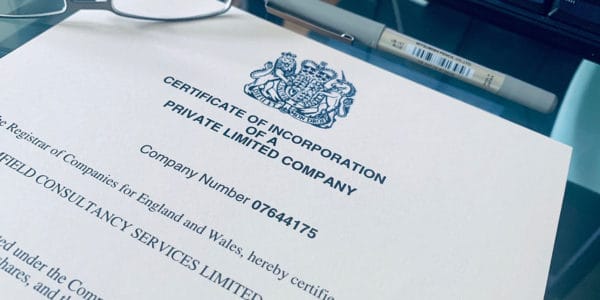
Set up a limited company by registering with Companies House or with a company formation agent.
Liability as a limited company
A limited company has limited liability, which means its members’ personal assets receive protection should the company experience financial difficulty. Shareholders only risk losing what they’ve agreed to pay for their shares.
Limited company legal obligations
Limited companies have more legal obligations than sole traders. The company’s directors are legally responsible for its day-to-day management and must ensure it meets its statutory obligations.
Legal requirements
The following summarises some of the key legal responsibilities that directors must fulfil:
- Corporation Tax – register online within three months of starting to trade
- Prepare an annual Company Tax Return and pay Corporation Tax on your company’s profits
- Annual accounts – prepare and file for both Companies House and HMRC
- Confirmation statement – file annually with Companies House
- Company details – keep these up to date at Companies House
- Company records and registers – maintain these and make them available for public inspection
- PAYE (Pay As You Earn) – register the company as an employer and set up PAYE before the first payday
- Registering for PAYE allows you to receive a director’s salary and pay any employees. You can operate PAYE yourself using payroll software, or you can appoint a payroll provider.
- Personal tax return – if you’re a shareholder and director, you will most likely need to file this with HMRC
- VAT – registration, returns, and payment
- Ensuring the company complies with all legislation


How do director/shareholders pay themselves from a limited company?
Limited companies pay Corporation Tax on profits at rates ranging from 19% to 25%. You must register to pay Corporation Tax within three months of starting to trade.
If you’re a director and shareholder, you can pay yourself a salary, take dividends, or combine both – and the distinction matters.
A salary is deducted before Corporation Tax is calculated; dividends are paid out of post-tax profits. Dividends are also taxed separately from salary and aren’t subject to National Insurance contributions. For 2026/27, the first £500 of dividend income is tax-free.
Taking a combination of salary and dividends is often more tax-efficient than a salary alone.
Advantages and disadvantages of limited companies
| Limited company advantages | Limited company disadvantages |
|---|---|
| Limited financial liability: Members’ personal assets are separate from business debts. They receive protection if the company runs into financial difficulty. | More paperwork: Filing the annual accounts, confirmation statement, tax return and statutory accounts, as well as bookkeeping and disclosure requirements, etc. |
| Easier to finance: Limited financial liability can make it easier to secure finance from lenders or investors. Limited companies can also raise money by issuing new shares. | Added expense: If you hire an accountant, you’ll need to pay them between £800 and £1,500 per year. |
| Separate legal entity: The company will continue to exist and operate even when members die or retire. | Publicly available company records: Certain information about the company and its finances is made available to the public. |
| More tax planning opportunities: Corporation tax rates are lower than Income Tax rates. Directors can pay themselves dividends that are taxed separately from their salaries. The first £500 dividend income is currently tax-free. Income can also be retained in the company or reinvested. | |
| Increased trust and credibility: Public accounts and filings and the established reputation of limited companies increase trust in the business and help attract investors. |
What’s better for tax – being a sole trader or limited company?
The limited company structure offers more opportunities for tax planning and efficiency. Limited companies pay between 19% on profits up to £50,000 and a main rate of 25% on profits over £250,000, with a tapered rate for profits in between. Sole traders pay between 20% and 45% Income Tax on profits – or between 19% and 48% in Scotland.
Limited company directors and shareholders must also pay personal tax on any money they receive from their company. However, overall, they may pay less tax than a sole trader does on the same income.
Limited company tax benefits
In addition to reducing individual tax liability, the limited company structure offers other tax advantages. Here we outline some of those benefits.
Reinvesting profits
Limited company owners can use surplus income to purchase equipment, cover operational costs, hire new staff, and grow their business. Unlike sole traders, they don’t have to withdraw all their profits every year,.
Deferring dividends
Limited company owners can defer withdrawing profits as dividends to a later tax year. For example, to avoid paying tax at a higher rate of Income Tax or dividend tax.
How to transition between business structures
You can change your business structure from sole trader to limited company and vice versa. If you’re a sole trader, changing to a limited company provides protection for your personal assets and can make your business more tax efficient.
Sole trader to limited company
Take the general following steps to change from sole trader to limited company:
- Incorporate a new private company limited by shares. You can do this on the Companies House website or with a company formation agent like Quality Company Formations.
- Set up a dedicated business bank account for your new limited company
- Inform your customers, suppliers, service providers, banks, lenders, landlords, and insurers
- Transfer the sole trader business to the limited company, including by updating any contracts and transferring any assets
- Inform HMRC – changing legal structure will affect how much tax you owe.
Limited company to sole trader
You’ll need to follow a formal winding-up procedure to close your limited company. You can do this by taking the following steps:
- Prepare the final set of company accounts and file them with HMRC and Companies House
- Settle any outstanding tax payments with HMRC
- Ensure any money in the company’s bank account is transferred out using the relevant procedures, for example by declaring a dividend
- Transfer out any assets held in the company’s name (for example, domain names)
- Arrange for outstanding contracts to be replaced with new contracts using the name of the sole trader.
- Inform creditors, suppliers, employees, directors, or members of the intention to close the company
- Directors formally request that the company be dissolved by filing the Form DS01
The company will be normally dissolved and struck off the company register within 2-3 months of Companies House receiving and accepting your application.
Remember to register for Self Assessment to start operating as a sole trader.


Real-world scenarios: choosing the right company structure
The following case studies give real-world examples of a sole trader business, a limited company business, and a business switching from sole trader to limited company.
Freelance writer: sole trader
A freelance writer works from home and has minimal expenses. Their business shouldn’t expose them to legal or financial risk, and they don’t need the reputational benefits of limited company status. They may be well suited to sole trader status, if they’re happy with the risks and benefits.
Self-employed decorator: sole trader to limited company
A self-employed decorator starts as a sole trader running a small business with a few clients and one supplier for stock. However, as their business grows, they need to employ additional staff, take on a bank overdraft facility and a business loan. Higher profits mean they might be better off paying Corporation Tax and paying themselves with a combination of salary and dividends. At this stage, they may benefit from switching from sole trader to limited company status.
Start-up company in a high-growth sector: limited company
A start-up founder’s 5-year business plan incorporates a steep growth curve through aggressively expanding the business and employing staff. They aim for substantial turnover and may incur considerable business expenses. They may take on new investors and want flexibility on tax. They are well suited to a limited company structure.
Choosing a company structure
Your choice of company structure will depend on several things, such as your personal preferences, the type of business you run, and how much you plan to grow it.
If you own a small business with few or no overheads, like a dog walker or a freelance graphic designer, and the risk you face is minimal, then you may not always gain as much from setting up a limited company, and you’ll have more legal and administrative obligations.
However, if you have lots of suppliers to pay regularly, or your profits are rising, or you’re taking on more risk, you may want the protection of a limited company structure.
If you’re looking for expert advice on company formation and the next steps to take, Quality Company Formations can help.



Join The Discussion